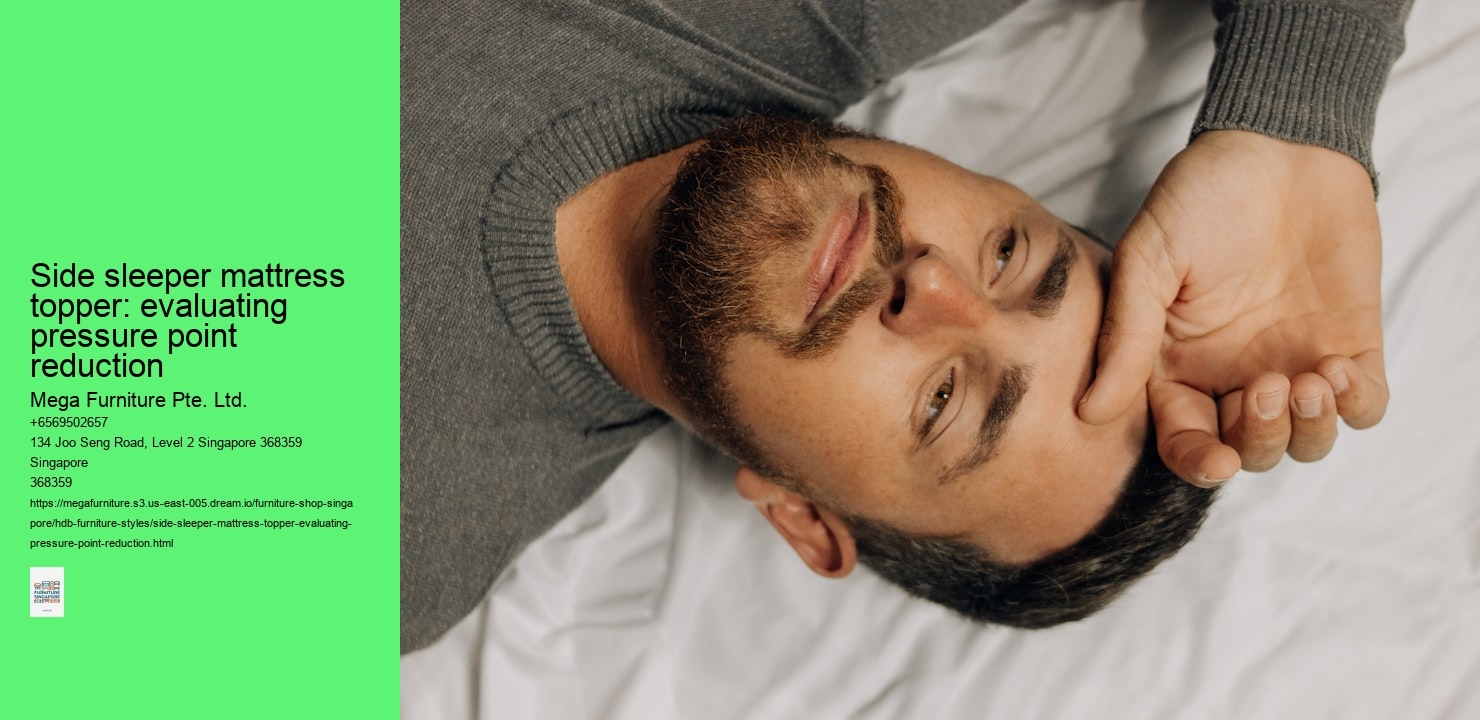
You’ll feel it first in the shoulder, that dull ache creeping up after a few hours on your side. It’s worse in the humidity, when your body sinks a bit deeper and the mattress doesn’t give enough to cradle the bony bits. A too-firm surface, common in many resale flat mattress sets or those basic bunk foams, just pushes back against your weight instead of distributing it. The hips get the same treatment—you wake up stiff, needing to roll over to find relief, and that cycle repeats until morning.
It’s a geometry problem, really. Your body’s widest points need to dip into the surface, not perch on top. A mattress that’s uniformly firm, like those one-layer foam slabs or old spring sets, treats every kilogram the same. But a side sleeper’s pressure isn’t evenly spread; it’s concentrated on a few square centimetres. Without a softer comfort layer to absorb and contour, those points bear the full load. You might think a firmer bed is better for support, but for side sleeping, that logic is backwards. Support here means letting the shoulders and hips sink just enough to keep the spine in line.
Pregnant women advised to sleep on the left side know this pressure acutely. The added weight shifts the centre of gravity, making any mismatch between mattress firmness and body shape even more punishing. That wrong bunk foam from a kid’s room, transferred to an adult bed in a pinch, is a classic culprit. It’s designed for lightweight frames, not for an adult’s lateral weight distribution. You’ll feel the difference within a week.

The fix isn’t about adding pillows or changing posture. It’s about the bed itself having a dedicated, forgiving top layer. A medium-soft to medium firmness, with a thicker memory foam or latex that moulds under your curves, makes the difference. That layer does the work of spreading the load away from the pressure points, letting the firmer base underneath maintain the alignment. Without it, you’re essentially sleeping on a platform.
There’s one exception, though. If you’re a side sleeper who also tends to roll onto your stomach part of the night, a purely soft topper might let your midsection sink too far. In that mixed-position case, you’d want a medium-firm base with a moderate contouring layer—something that accommodates the shoulder but doesn’t trap you if you turn. Otherwise, for the dedicated side sleeper, that pressure point is a clear sign the mattress isn’t working with your shape.
A mattress that’s too firm for side sleeping does more than just make you uncomfortable—it actively misaligns your spine. When your shoulder can’t sink into the surface, your torso is forced to tilt upwards, creating a lateral curve in your back that persists all night. You wake up with that familiar stiffness across your shoulders and lower back, a direct result of your spine being held in a compromised position for hours. It’s not just about pressure points; it’s about the entire structure of your body being subtly bent out of shape.
Local physiotherapists often point out this exact scenario to their patients, especially side sleepers in our climate. The humidity here can make a mattress feel even more unforgiving, as materials like dense foam become less pliable and more resistant to contouring. That lack of sink means your hip doesn’t get the necessary support either, leaving your pelvis tilted and your lumbar spine strained. The advice is consistent: a side sleeper needs a comfort layer that yields enough to cradle the shoulder and hip, allowing the spine to rest in a neutral, straight line.
The exception, really, is if you’re a very lightweight side sleeper. For someone with a slight frame, a medium-firm surface might provide enough contour without excessive sinkage. But for the majority, a surface that doesn’t accommodate those key pressure points is a recipe for morning aches. You’ll find yourself rolling onto your back or stomach subconsciously, trying to escape the discomfort, which only disrupts your sleep further.
So the goal isn’t just softness; it’s strategic support. A topper or mattress with a thicker, responsive comfort layer—memory foam or latex that adapts to your shape—lets your shoulder depress slightly while still supporting the rest of your torso. That keeps your spinal column aligned from neck to hips. Ignoring this and opting for a universally firm bed, often chosen for perceived durability or support, is a common misstep that costs you in daily comfort and long-term posture.
Consider your own experience. If you consistently wake with a stiff back or find yourself shifting positions constantly, your mattress’s firmness is likely the culprit. Addressing it with a properly contouring layer can change your sleep—and your mornings—almost immediately. It’s a straightforward fix that aligns your body with the surface you’re on, rather than forcing your body to conform to it.
Replacing a whole mattress runs into thousands, while a quality topper sits comfortably in the hundreds. For a typical 4-room BTO budget, that's a serious difference—you're looking at a median figure that could cover a major appliance instead. The math is straightforward: a topper addresses the comfort layer without the bulk expense of a new base. It's a targeted upgrade, not a wholesale replacement. That leaves more of your renovation fund for other essentials, like storage or lighting. This approach recognises that Singapore flats often demand trade-offs, and sleep shouldn't be the casualty.
Side sleepers need that extra cushioning at the shoulders and hips, a zone where many mattresses simply aren't soft enough. A dedicated topper adds a conforming layer that cradles these pressure points, letting the underlying mattress handle support. Memory foam or latex toppers excel here, moulding to your shape to redistribute weight. This isn't about making the bed softer overall; it's about strategic softening where your body presses hardest. The result is less morning ache and a more restful night, especially for those advised to sleep on their left side during pregnancy. It turns a generic surface into a position-specific one.
You don't need to orchestrate a full mattress removal and delivery, which in an HDB block can be a logistical headache. A topper rolls out, often bends to fit through a tight lift door, and lays directly on your existing bed. There's no waiting for a bulky frame to clear a 90cm doorway, no surcharge for staircase carrying. It's an instant comfort adjustment you can implement the same day you buy it. This convenience matters when you're juggling work, family, and a new flat setup. The upgrade happens without disrupting your entire bedroom layout or sleep routine.

Committing to a whole new mattress is a permanent decision, but a topper lets you test a material or firmness level first. If a memory foam layer feels too warm or a latex one too bouncy, you can swap it without a huge financial penalty. This experimental phase is crucial for side sleepers, because the ideal pressure relief is personal. You might discover you need a thicker profile than expected, or that a hybrid topper works better. It's a low-risk path to figuring out what your body actually needs before you invest in a lifetime mattress. That knowledge is valuable for any future purchase.
A good mattress base can last a decade, but its comfort layers often compress first. Adding a fresh topper revitalises that top surface, extending the useful life of your entire sleep setup. This is a kiasu move in the best sense—protecting your initial investment and avoiding premature disposal. It aligns with a practical, value-first mindset common in Singapore households, where furniture is expected to endure. The topper becomes a renewable component, a part you can replace every few years while the supportive core remains. That's smarter than discarding a structurally sound mattress just because its surface has worn thin.
Side sleeper mattress topper: ensuring proper spinal alignment
The way it works is simple: your body heat softens the foam, letting it mould to your shape. It's not instant—you'll feel it gradually cradle your shoulders and hips, which is exactly where side sleepers need the cushioning. That slow response is what makes it so effective for pressure relief; you sink in just enough to offload the weight without feeling stuck. In a humid room, the warmth from your body does the job nicely, and the foam itself doesn't react badly to moisture in the air. It's a material that thrives in our climate.
You'll find options ranging from about two inches up to four inches thick. Two inches is enough for a noticeable comfort upgrade on a firm mattress, especially if you're just looking to soften the surface. Go for three or four inches if you need serious contouring—that extra depth allows for a deeper cradle, which can be a game-changer for anyone with persistent shoulder or hip pain. A thicker layer also helps maintain that spinal alignment side sleepers need, keeping the hips from sinking too far down.
The one time I'd skip a thicker memory foam topper is if you're already sleeping on a very soft mattress. Adding a four-inch contouring layer to a plush base can sometimes leave you feeling like you're swimming in the bed. For most setups, though, especially on a medium-firm Singapore-standard mattress, the thicker options are the way to go. They create that proper pocket for your shoulder, which is what you're after.
Just remember, the foam's density matters too—a higher density foam will hold its shape longer and support you better over the years. You want something that feels substantial when you press into it, not something that collapses flat. It's a detail that's easy to miss when you're just comparing thicknesses in a showroom, but it's the factor that determines whether your topper lasts or goes flat after a few months. Look for a firm, resilient feel beneath that initial softness.
Natural latex gives you that nice sink without the deep swampy heat of memory foam. It’s the buoyant one—your shoulder and hip press in, and it pushes back gently so you don’t feel stuck. That’s the pressure relief side sleepers need, especially if you’ve got that west-facing bedroom where the afternoon sun already heats things up before you even lie down. You want a cooler material that can contour without trapping warmth, and latex does that.
The trick with latex in our climate is the ventilated layers underneath. A slab of pure latex on a solid base will still feel warm because the air can’t move. You need a mattress or topper design that channels airflow—look for ones with perforations or a core that’s built with channels, not just a flat block. That way, the year-round warmth gets dissipated instead of building up right under your back. It’s a non-obvious point: the support comes from the latex, but the coolness comes from how it’s layered.
For most side sleepers here, a medium-soft latex topper is the right call. It cushions the pressure points while keeping your spine in a decent line—you won’t sag into a hammock shape. The only real exception is if you’re a heavier person; then you might need a medium-firm latex layer so the support holds up over time. But for the majority, that softer contour is what lets you sleep on your left side through a pregnancy or just get through the night without waking up with a sore shoulder.
Humidity, that one really tests any natural material. Latex is more resistant than memory foam, but it still needs a breathable cover. Don’t wrap it in a thick, non-breathable protector; you’ll trap moisture and defeat the whole cooling design. A simple cotton or bamboo cover lets the air through while protecting the layer itself. It’s a small detail, but it makes the difference between a topper that lasts and one that feels damp after a few monsoon seasons.
So if you’re after that supportive sink without the heat, natural latex with a ventilated build is the way to go. Just remember to pair it with the right cover and don’t seal it up like a plastic bag—let it breathe. That’s how you get the contouring you need for side sleeping in a flat that’s warm year-round.
The Joo Seng showroom floor is where you finally feel what the brochures can’t tell you. Memory foam mattress toppers are marketed with vague terms like ‘plush’ or ‘medium’, but when you’re a side sleeper, those labels don’t translate to the specific relief you need at your shoulder and hip. That’s why you have to get on the bed yourself—and not just lie flat. You need to assume your actual sleeping position, because the pressure mapping changes completely when you’re curled on your side.
The Somnuz® range there lays out its firmness grades side-by-side, a rare chance to compare without travelling between stores. Don’t just press your hand into the surface. Sit on the edge, then properly roll onto your side, letting your full weight settle. Pay attention to the sink around your shoulder—it should cradle the joint without letting it bottom out onto a hard base. Your hip needs a different kind of support; it shouldn’t feel like it’s dangling unsupported, but rather that the foam is contouring to lift it slightly, keeping your spine in a neutral line. This is the test that separates a topper that merely feels soft from one that actually redistributes pressure.
You’ll notice the difference between grades quickly. The softest option might feel luxurious at first touch, but in a side position your shoulder could sink too deep, pulling your alignment out. A medium-firm might seem too stiff when you lie flat, but on your side it provides that crucial hip lift without excessive sink. For most side sleepers, that middle ground is where you’ll find the balance—enough contour to relieve the points, enough support to keep everything aligned. The only time you’d go softer is if you’re particularly lightweight; a heavier frame will need that firmer base to prevent that ‘hammock’ sag.
Ignore the impulse to test for five seconds. Stay in that side position for a full minute, maybe two. Let the foam warm and react. That’s when you’ll feel if it’s genuinely adapting or if it’s just a static cushion. And do this on a proper Queen-sized display unit, not a small sample pad—the full product behaves differently. It’s the most direct way to know if a topper will work in your 4-room BTO bedroom, because a catalogue photo won’t tell you how your shoulder feels at two in the morning.
The first thing you feel when you lie down is the plushness, that blissful sink-in that cradles your shoulder. But that same softness is the part that wears down fastest. A topper that feels like a cloud is often made of lower-density foam, and it’ll compress under constant pressure from a side sleeper’s hips and shoulders. In a typical Singapore household—where the bed is used every single night, often by one person who consistently sleeps on their side—that gentle cushioning can lose its loft within a couple of years. You’ll notice it first as a permanent dip where you always lie.
Higher-density foam, on the other hand, feels firmer at first. It doesn’t give that immediate hug, but it’s built to resist compression over time. For a side sleeper, this creates a tricky balance: you need enough softness to relieve pressure points, but you also want the thing to last. A dense memory foam or latex topper might feel a bit resistant during the first few weeks, but it maintains its supportive contour for far longer. Think about the long-term investment—a topper that lasts five years in a 4-room BTO master bedroom is a better value than one that needs replacing after two, even if the initial comfort isn’t quite as dreamy.
So where’s the compromise? I’d lean towards a medium-density option. Look for a topper that specifies a density around the middle of the range; it won’t be the softest thing on the showroom floor, but it’ll offer decent pressure relief while holding its shape. The one exception is if you’re dealing with acute shoulder or hip pain right now—then, a plush topper can be a necessary short-term solution for relief, even if you know its lifespan will be shorter. Just plan for a replacement sooner.
Ultimately, your choice hinges on whether you prioritise immediate, profound comfort or a longer, gradual partnership with your mattress. For most side sleepers in Singapore, who aren’t in acute pain, the smarter buy is the denser one. You adapt to its firmer feel over a month or so, and then you enjoy years of consistent support without that sinking feeling. That’s the trade-off, plain and simple.
Spend any time browsing mattress forums or shop reviews in Singapore, and you'll notice four questions popping up again and again. They're the queries that surface after a long night of shoulder ache, or when you're staring at a brand-new mattress that feels like a plank.
'Best mattress topper for shoulder pain in Singapore?'
For pressure points, memory foam or latex are the usual suspects. Latex offers a faster bounce-back and less heat retention, but memory foam’s slower contouring can cradle the shoulder more deeply. That contouring is what you want—a material that yields under your heavier shoulder and hip, not one that pushes back. For pure pain relief, a high-density memory foam topper often wins, though you'll need to manage the warmth.
'How thick should a side sleeper topper be?'
Too thin, and it's just a sheet—it won't change the feel of the underlying mattress. Too thick, and you risk sinking in too far, losing support. For a typical Queen bed in a 4-room BTO master bedroom, a 5cm topper is a good starting point. It provides enough material to properly cushion the shoulder and hip without making the bed feel unstable. If your base mattress is exceptionally firm, you might go up to 7cm, but that's where you start to notice a real change in how the bed feels—almost like a new mattress altogether.
'Does memory foam topper make bed hotter?'
Yes, it can. Memory foam is denser and traps body heat more than latex or simple fibre fillings. In our humidity, that's a genuine concern. The trade-off is that its heat-sensitive softening is precisely why it contours so well for side sleepers. If you're a warm sleeper already, look for a topper with cooling gel infusion or an open-cell structure. Alternatively, pair it with breathable, moisture-wicking bedding to help manage the climate.
'Can a topper fix a too-firm mattress?'
Absolutely, that's its primary job. A firm mattress that's causing you to wake up with sore spots is often just missing a comfort layer. Adding a topper introduces that missing cushioning directly where your body needs it. It's a far more economical fix than replacing the whole bed. The only time it won't work is if the mattress underneath is already sagging or broken—adding softness on top of a failed foundation just creates a hammock effect, which is worse for your alignment.
You’ve got your shopping list ready and you’re about to head out—but there’s a checklist you should run through first, because forgetting one detail can turn a smooth purchase into a headache. Start by measuring the thickness of your current mattress, not just the overall bed height. That extra two or three inches might mean your new topper won’t fit under your existing bed frame or that a thicker mattress will block your bedroom window. For side sleepers, that extra cushioning is exactly what you’re after, but you need to know how much room you’ve got to add it.
Next, take a note of the firmness you’re sleeping on now. If your base is already medium-soft, adding a plush topper might push you into a sinkhole feel. Conversely, a firm mattress underneath could be the perfect foundation for that softer, pressure-relieving layer you need for your shoulders and hips. It’s about balance—you don’t want to end up with a setup that’s too soft to support your spine. Decide on your budget range too, and stick to it. In the showroom, with all the options laid out, it’s easy to be swayed by features that stretch your wallet. Having a clear ceiling, even a flexible one between two figures, keeps you focused on what actually matters for your sleep.
Then, confirm your bedroom dimensions with a tape measure, not an estimate. A Queen mattress is 152 by 190cm, and in a typical 12 sqm HDB master bedroom, that can feel like it takes up the entire floor. You need to account for clearance—at least 60cm on the side you get out of bed, and a bit of space on the other sides for movement and maybe a slim bedside table. Don’t forget to check your internal doorway width; a mattress can usually bend and fit, but you’ll want to know if there’s a tight turn from the corridor. This is the step most people skip, and it’s the one that leads to delivery day surprises where the bed just won’t go in.
With these three notes in hand—thickness, existing feel, budget, and room size—you’re set. You can walk into a showroom and test the toppers or mattresses with your actual constraints in mind, not just a vague idea of comfort. You’ll know which models are physically possible in your space and financially sensible for your plan. The only exception? If you’re certain you’re replacing the entire mattress set, then you can be a bit more flexible on the thickness check, but even then, the room dimensions and budget are non-negotiable. That final prep turns a browsing trip into a targeted mission.
Maintaining a mattress topper in Singapore involves managing humidity and cleanliness. Regular airing helps prevent moisture buildup within the comfort layers. Using a protective cover can shield the surface from spills and dust. Simple care routines preserve the topper's pressure-relieving properties for years.
Testing a mattress topper physically is crucial for side sleepers to feel the pressure relief. At Megafurniture's Joo Seng or Tampines showrooms, you can lie down to assess comfort layers. This hands-on experience confirms if the medium-soft feel suits your shoulder and hip alignment. You can browse the options after experiencing them firsthand.